Our Approach
Inquiry, Empathy, and Understanding
We recognize that we will encounter subject matter in class discussions and lessons that can be emotionally charged for ourselves, our students, and our families. This may happen due to events unfolding in the outside world. We do not avoid such conversations; instead, we strive to approach these conversations with honesty and authenticity, to see our students and colleagues as our fellow learners, and to communicate understanding and respect while modeling and encouraging the inquiry process. We recognize and embrace that discomfort is a pathway to learning for both ourselves and our students.
Students thrive here because of small classes, personal attention, and opportunities that stretch far beyond textbooks. From our 14-acre campus along the Boise River to learning experiences around the globe, Riverstone students grow into independent thinkers and global citizens.

Concrete Actions
We strive to lead our students through complex and potentially emotional discussions by:
- Teaching and reinforcing classroom agreements (ie: circle guidelines in Middle School/High School) which help foster respectful and open dialogue.
- Modeling the language we want students to use. such as “I feel,” “This makes me feel,” “I’m relying on_____ for my information, does anyone know another source?”, “My experiences have led me to conclude…” etc.
- Emphasizing the importance of sources, evidence, and reliability
- Asking open-ended questions that prompt student curiosity and discovery
- Encouraging students to make connections to their own lives
- Articulating and highlighting the tensions inherent in being both scholarly and empathetic. (Not that these two are opposites, but that emphasizing credible sources could lead someone to determine that another’s viewpoint is wrong, therefore stupid, therefore you’re stupid, etc.)
- Approaching conversations as a learner: Students may have better information, understanding or experience with some topics than their teachers. Teachers should model the posture of an inquisitive learner, rather than an “unchallengeable” expert.
Civil Discourse in Community
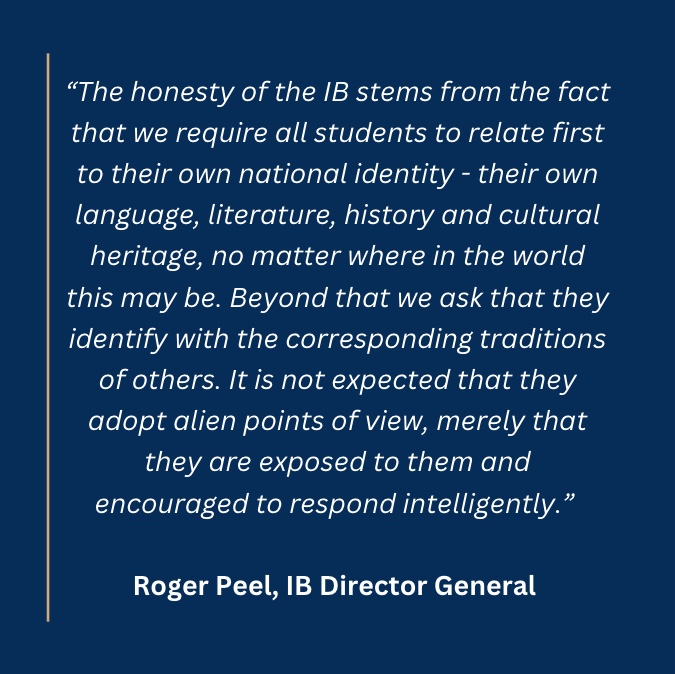
The International Baccalaureate (IB) emphasizes honesty by prioritizing students’ connection to their own national identity, including language, literature, history, and cultural heritage. Additionally, students are encouraged to appreciate and understand the traditions of others without necessarily adopting them. The concept of civility, originating from Cicero’s idea of societas civilus, emphasizes standards of conduct towards others for the greater good of society. In civil discourse, democratic participants are expected to respect each other, even when it’s challenging.
Claims Testers:
These claims testers allow us to engage with claims in a variety of ways to help us decide whether they are valid or helpful. They can also guide us to ask questions that help continue the discussion. View each claims tester below for more information.
Authority
What do the experts say? Teachers, texts, academic studies, and primary and secondary sources can help us see if a claim has already been thoroughly explored by professionals. This claim tester connects to IB expectations around research and asks students to assess authorities’ credibility, consensus and the work professionals have already done on the topic. It should be noted that questioning authorities is encouraged, but that one should do so with curiosity and an appropriate amount of humility.
Evidence
What does the data say? The strongest of the claim testers, evidence is the backbone of developing understanding. Used by scientists, detectives, entrepreneurs, government leaders and a host of other professions, data and evidence should inform everyone’s thinking. Students should explore qualitative vs. quantitative studies, primary sources, and experimental research.

Intuition
What is your gut feeling or immediate reaction? While this claim tester is not something you can cite in a paper or use in a debate, one’s immediate reaction can guide students and teachers in their inquiry. This can be helpful in quickly assessing particularly bold or outlandish claims. Philosophers have called it prima facie and a modern synopsis can be found in Malcom Gladwell’s Blink.
Logic
Can we use our critical thinking skills to analyze the claim? This claim tester asks us to analyze causation vs. correlation, fallacies and counterarguments. By using these critical thinking tactics students can reason with a variety of constructs to evaluate whether a claim is reasonably valid.